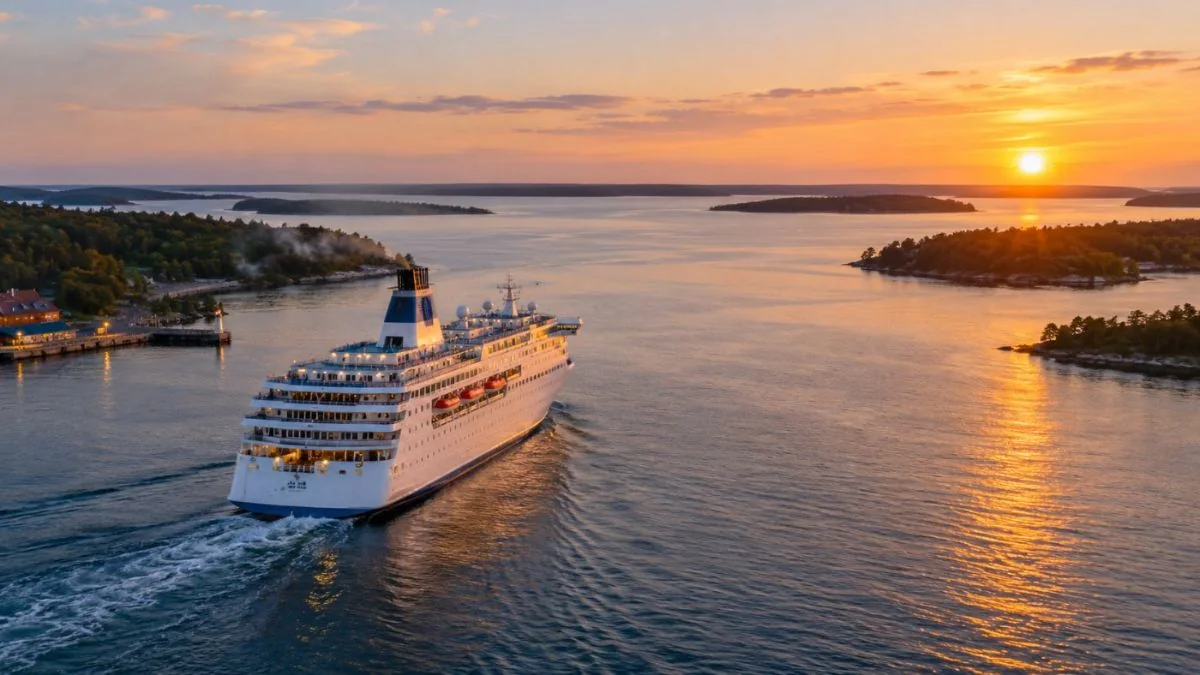
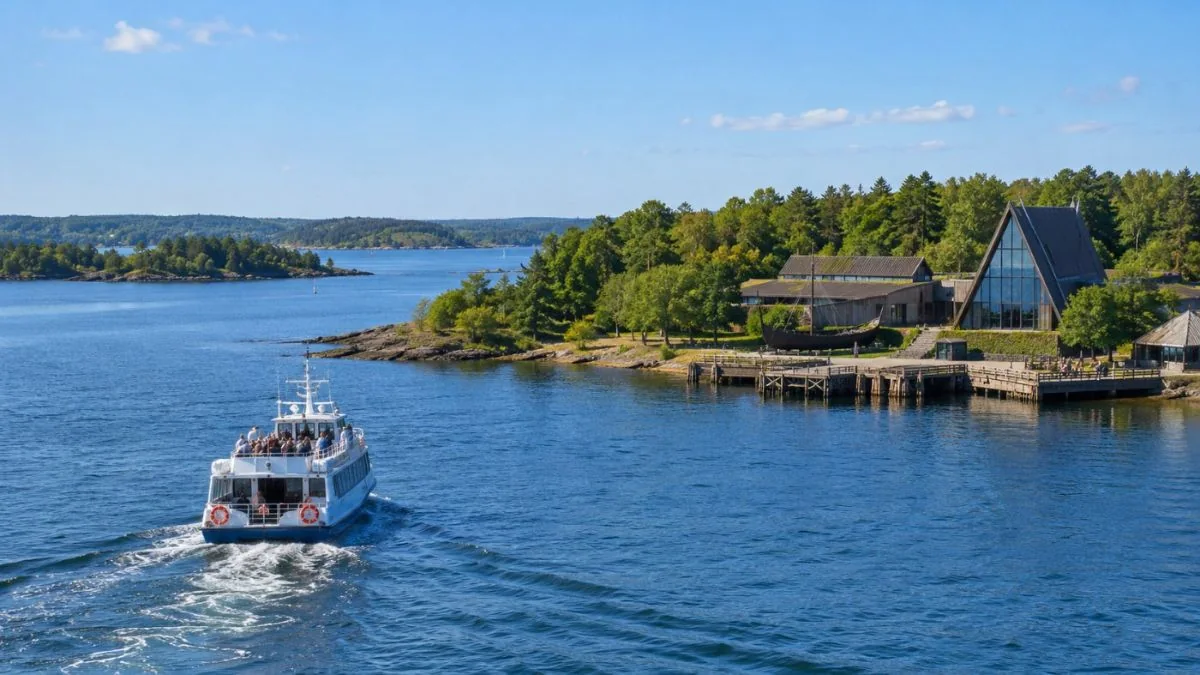
The Oslofjord reaches about 100 km in from the open sea and ends right at the steps of Oslo City Hall.
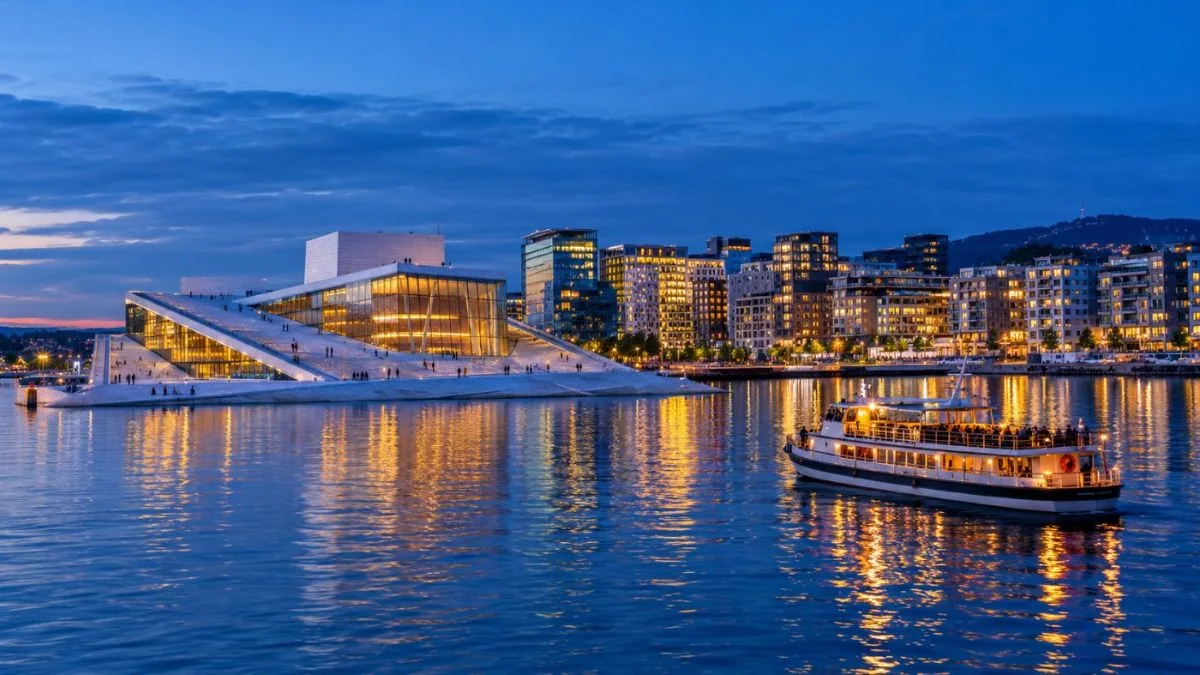
Sail past the marble Opera House and Akershus Fortress, out between cabin islands and little lighthouses, on a wooden ship, a silent boat or a dinner cruise at sunset.
Pier and boat, spelled outEvery cruise leaves from a different quay
Real guest ratingsLive GetYourGuide figures
Free cancellationUp to 24 hours before, on every cruise here
Sailing in every seasonHeated saloons and blankets in winter
Cruises
Choose your Oslofjord cruise
In the centre, the quiet electric loop from the Opera House, the shortest and the closest to the station.
Either side, two hours on a wooden sailing ship from City Hall, or the silent boat with a live guide. Every card opens a full tour page.
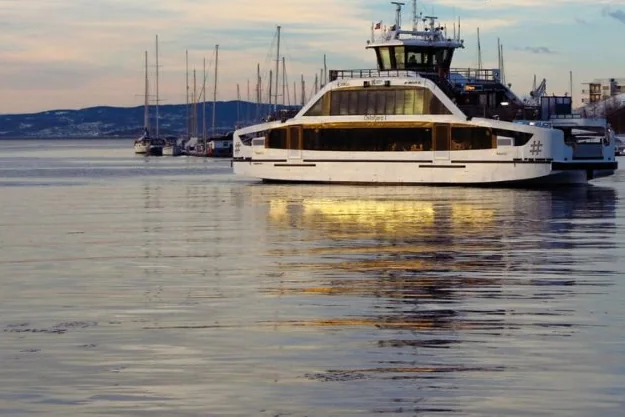
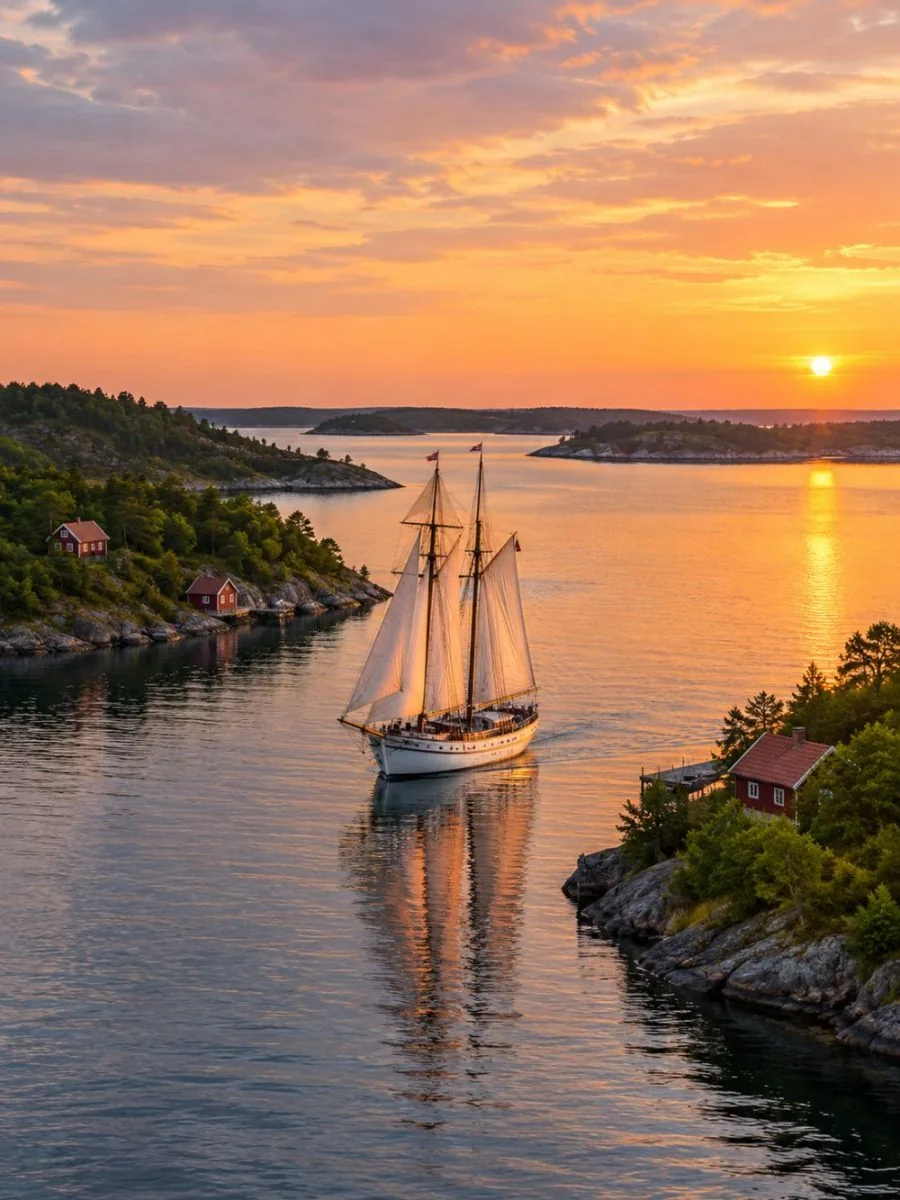
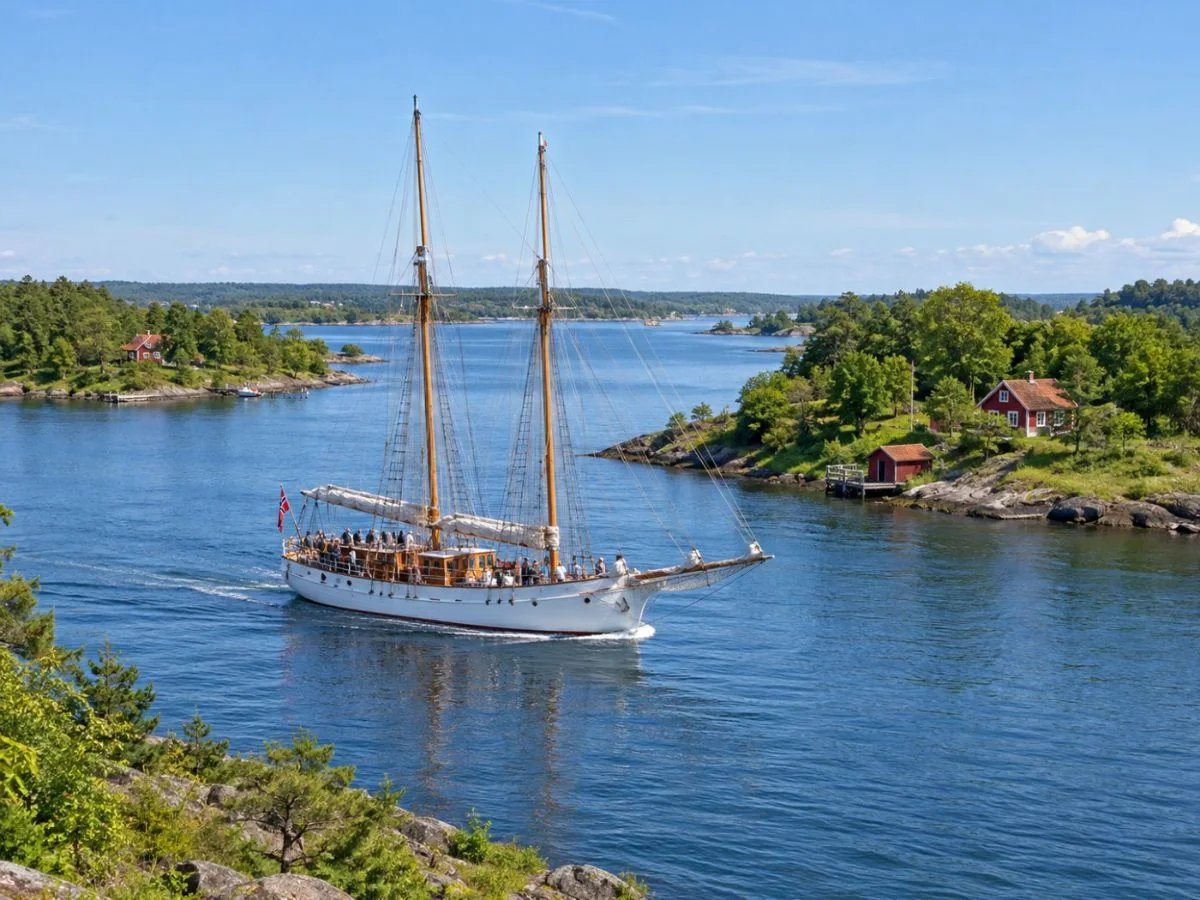
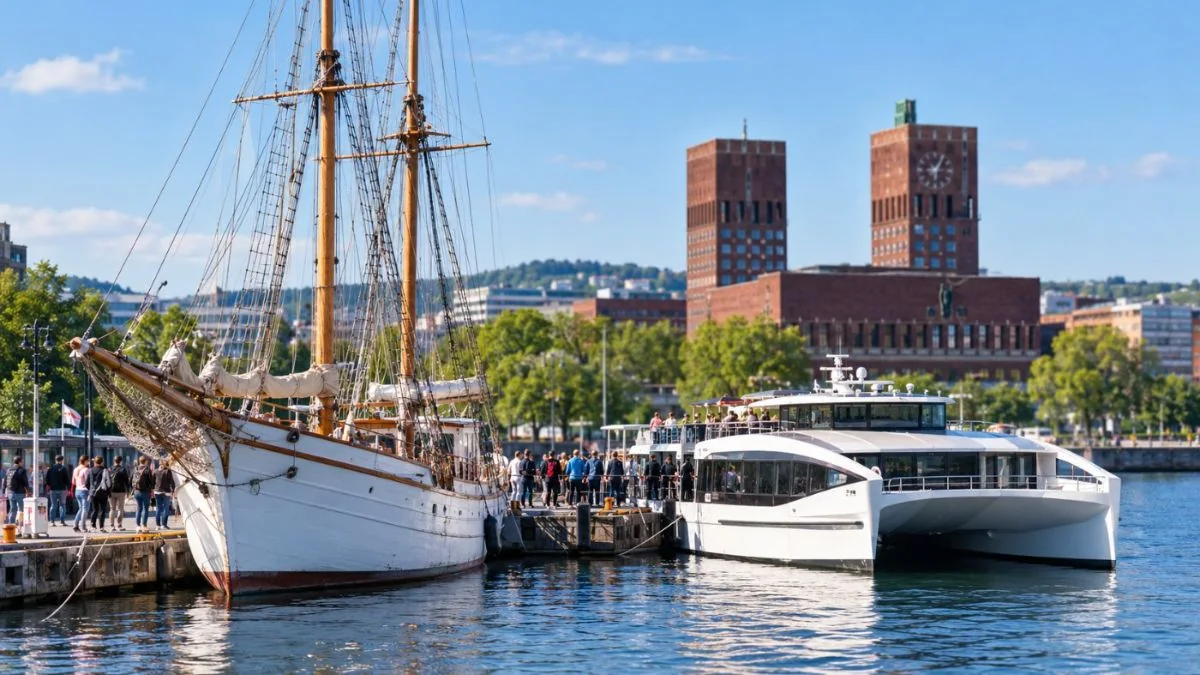
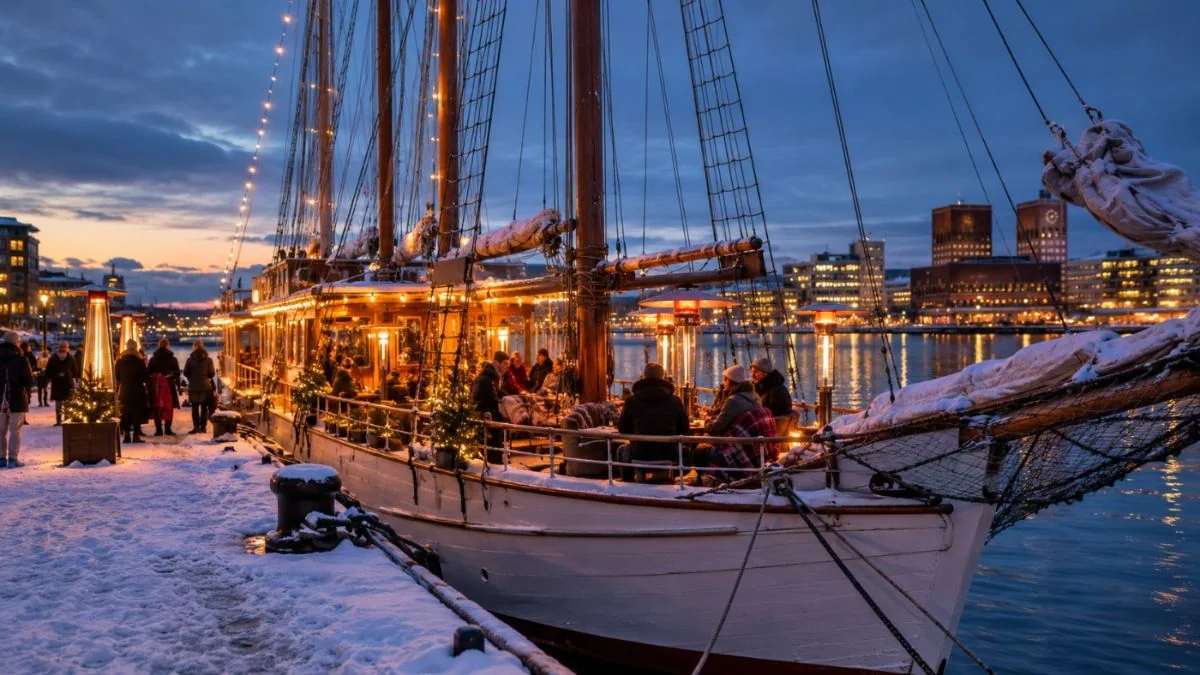
The old-school way onto the fjord: a wooden sailing ship from City Hall, blankets and a heated deck. The ticket also covers the Bygdøy museum ferry the same day.
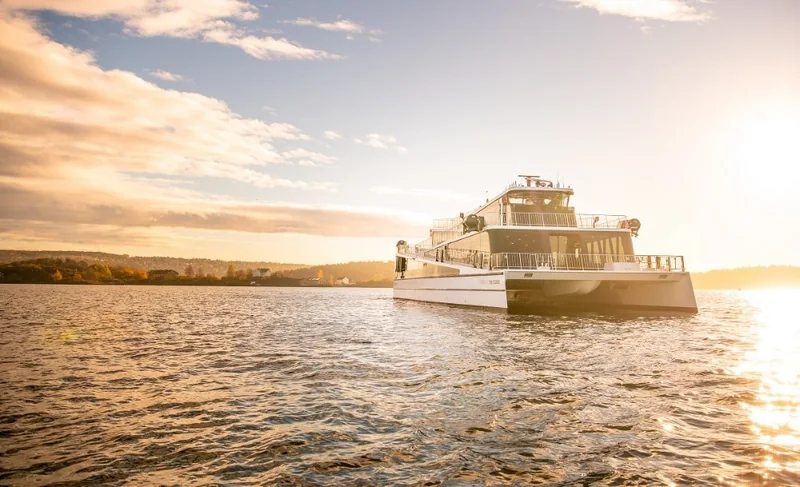
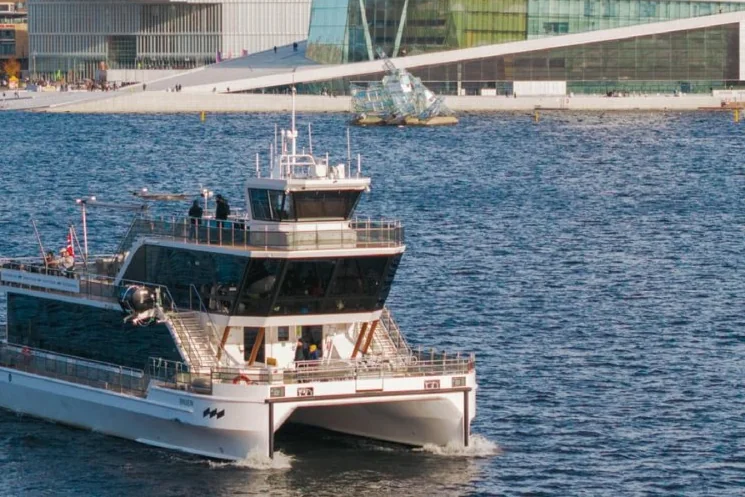
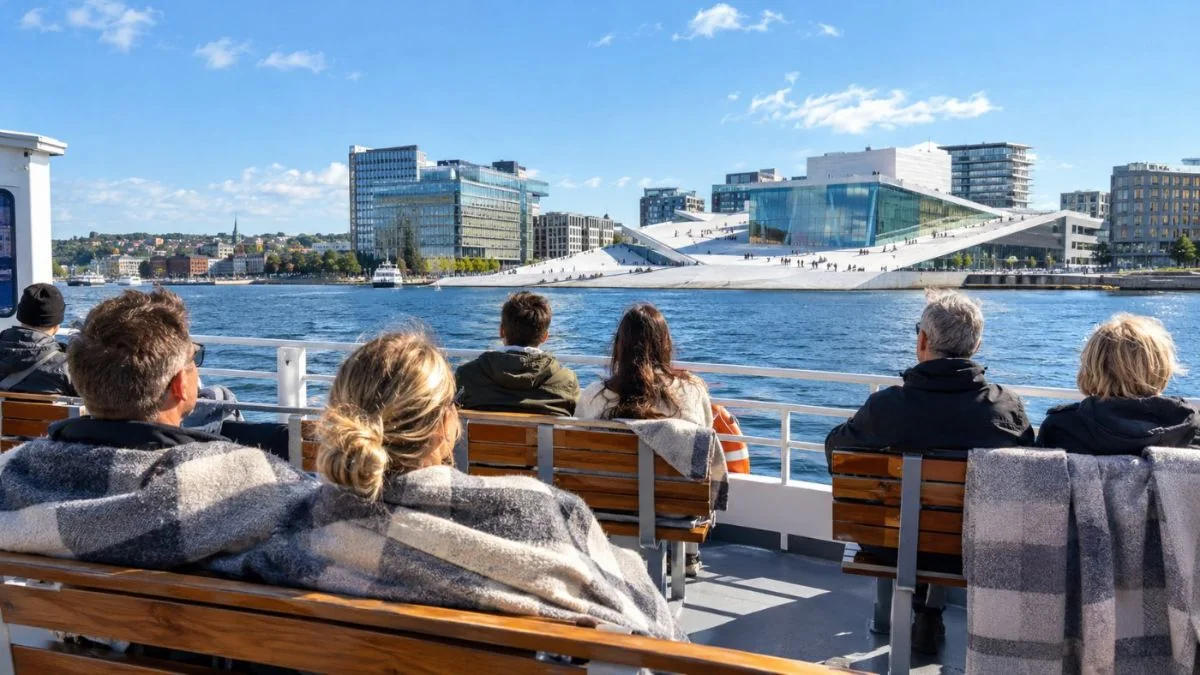
A quiet electric catamaran from the Opera House out among the inner islands and back. Commentary comes through a free app in seven languages, so bring headphones.
Three questions sort it out. Do you want a person talking or a recording in your ear? Which pier is
nearest your hotel? And do you want to stay on the boat, or step off onto an island?
Free cancellation up to 24 hours before on every cruise here. Seats on the wooden sailing ship are not
numbered, so arrive early in summer. Ruter's island ferries from City Hall Pier 4 run on an ordinary public transport ticket.
Before you book
A real fjord, just not the one on the posters.
The Oslofjord runs about 100 km from Færder at the open sea to Oslo, and the city sits on its innermost end. North of the
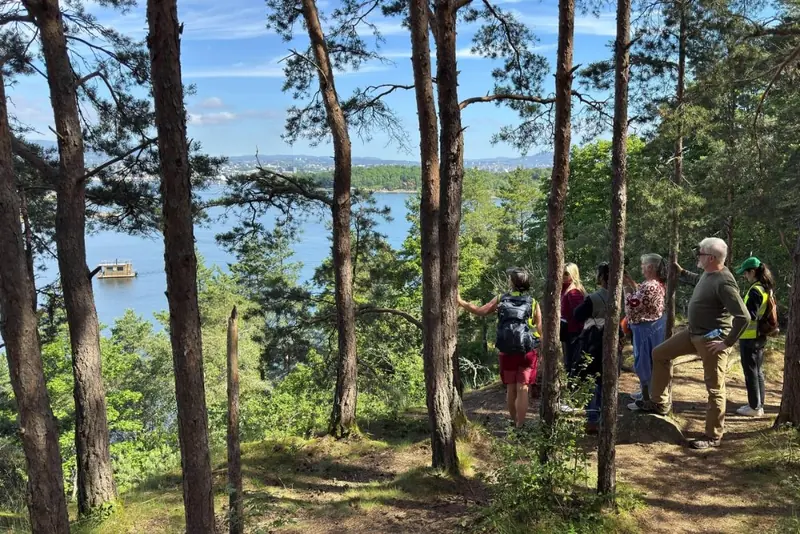
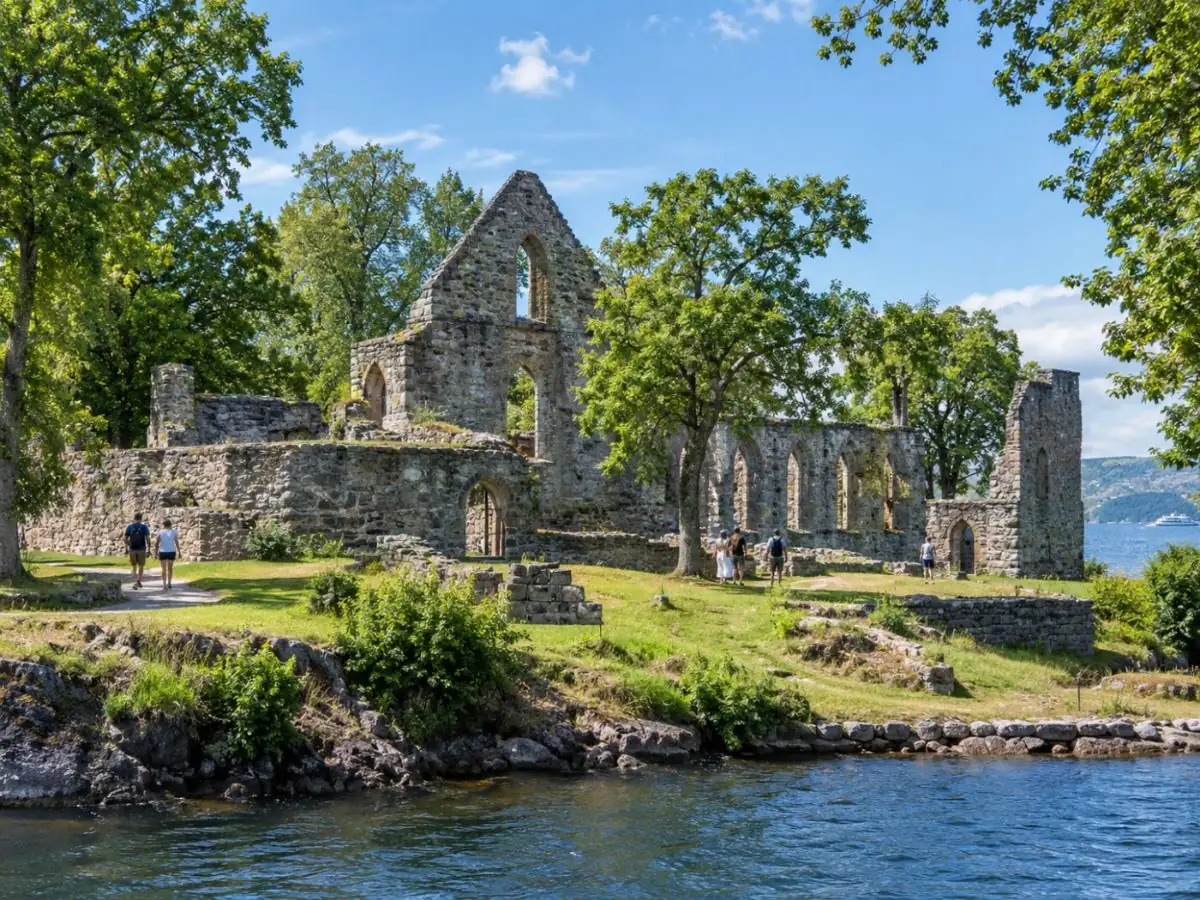
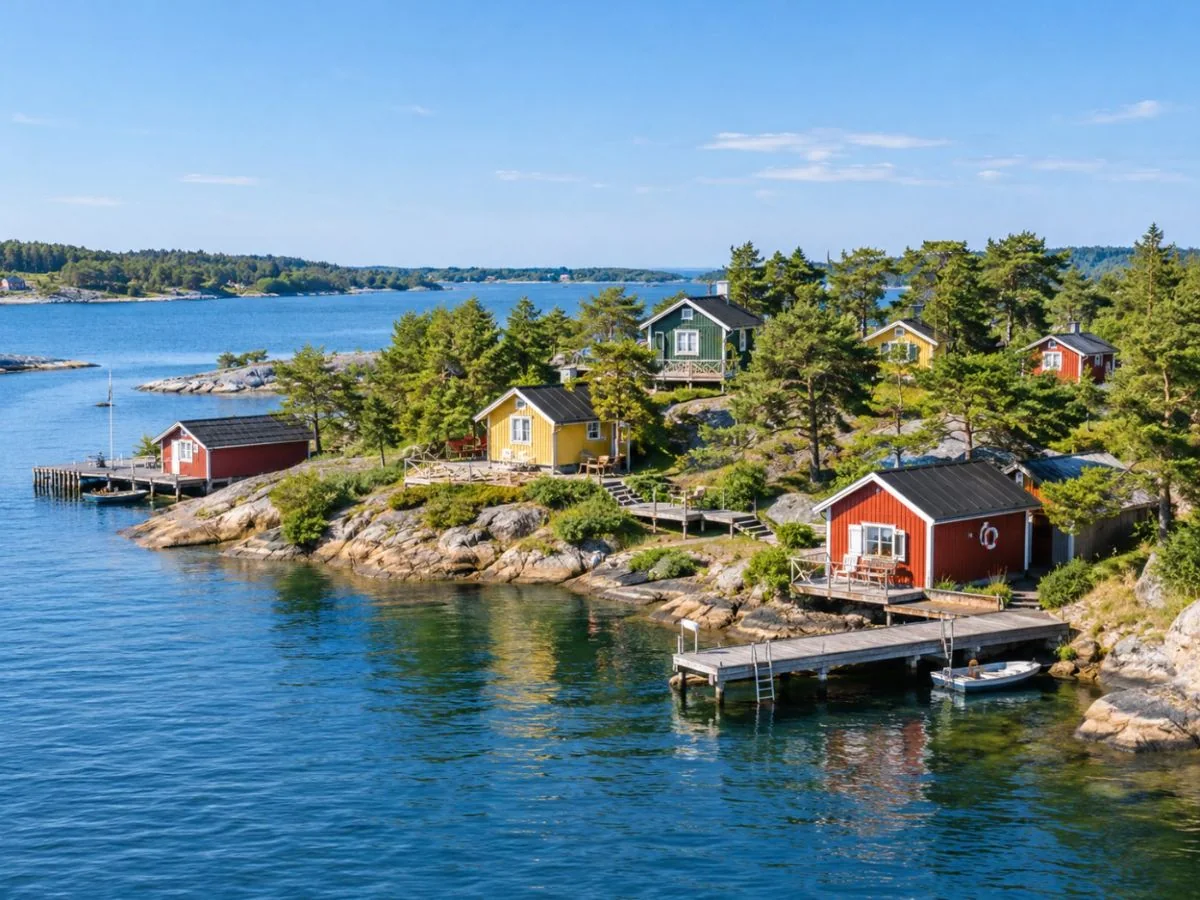
narrow sound at Drøbak, the inner fjord is only 3 to 5 km wide and full of islands: Hovedøya with its medieval monastery
ruins, Lindøya with its painted cabins, the nature reserve on Gressholmen. Store norske leksikon calls it a threshold fjord,
formed in an ancient rift and later worked over by glaciers.
What it lacks is the vertical drama of the west. Its shores are low and wooded, not walls of rock rising over a kilometre.
That changes what you are buying. A cruise here is a city seen from the water, with sea air and islands, in about two
hours. The boats differ in who talks (a live guide, a speaker or an app), which pier they leave from, and whether you
stay on board. The cliffs and waterfalls are a day's travel west, by the Bergen Line and the Flåm Railway.
100
Kilometres of fjord from the open sea to Oslo, narrowing to about 1 km at Drøbak,
where a shallow sill about 19.5 m below the surface separates the inner basins from the outer fjord.
Piers, public ferries, getting there and the practical bits: one tab each.
Rådhusbrygge 2: Brim Explorer's silent boat and its dinner cruise, just before the Piren restaurant.
Rådhusbrygge 3: Båtservice's wooden sailing ships and the Bygdøy museum ferry.
Rådhusbrygge 4: Trollcruise's electric boat and Ruter's public island ferries, by the Fisketorget building.
Langkaia 1: the electric cruise from the Opera House, a few minutes' walk from Oslo Central Station.
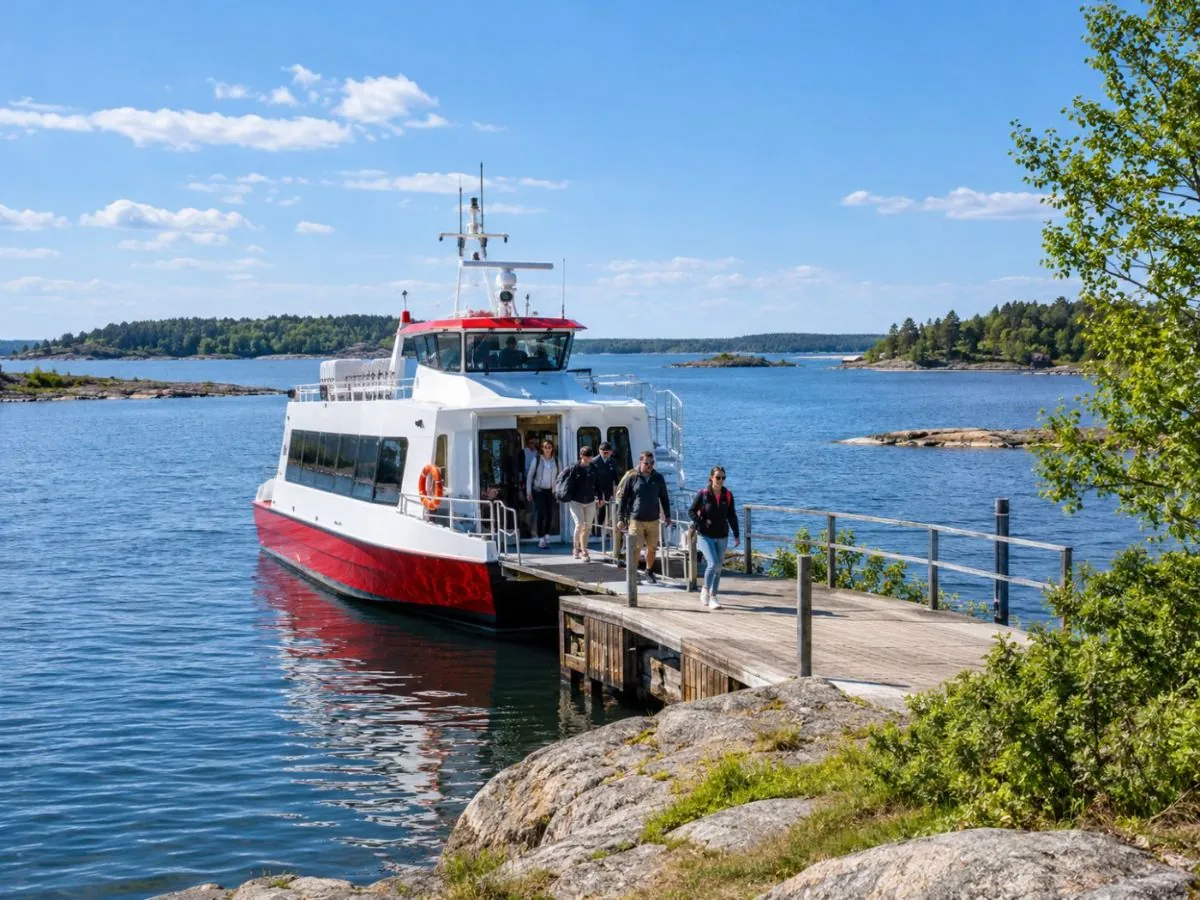
B1: Ruter's island loop from Rådhusbrygge 4 to Hovedøya, Lindøya, Gressholmen, Bleikøya and Nakholmen, all year.
B2: the summer line out to the beach and campsite on Langøyene.
Tickets: an ordinary Ruter ticket is valid on all Ruter boats; the Oslo Pass covers them too.
Not Ruter: the Bygdøy museum ferry is private and runs from about March to early October.
From Oslo Central Station: Langkaia is a few minutes on foot; the City Hall piers are about 20 minutes' walk west along the harbour.
By tram or bus: stops at Aker brygge and Rådhusplassen are a short walk from Piers 2 to 4.
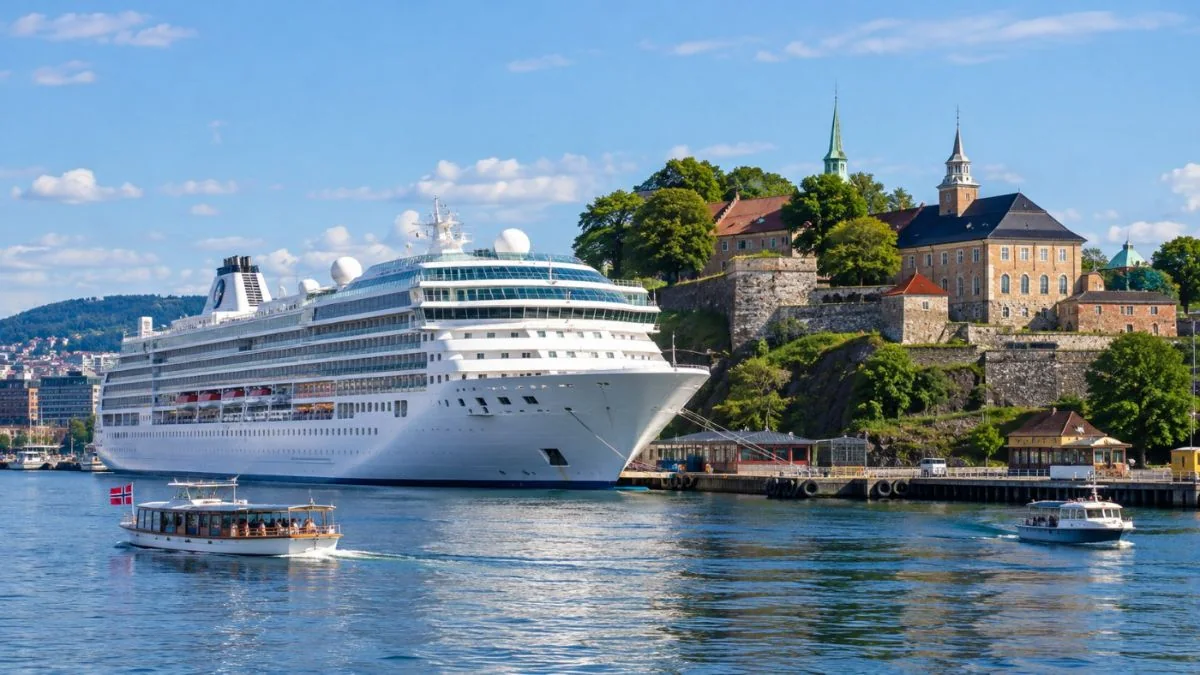
From a cruise ship: Søndre Akershuskai and Revierkaia are in the city centre, close to both departure points.
On foot along the water: the harbour promenade links Bjørvika, Akershus and Aker Brygge.
The water is colder than the air: bring a layer even in July. Most boats lend blankets.
All the sightseeing boats on this site have indoor seating, and most sell coffee and snacks on board.
Wheelchair users: the Opera House cruise, the silent boat, the dinner cruise and the electric boat list step-free access.
Oslo has no water taxis, so on the islands keep an eye on the last ferry back.
LengthAbout 100 kmFrom Færder at the open sea to Oslo.
Inner fjord3 to 5 km wideNorth of the Drøbak narrows, where the islands are.
The sillAbout 19.5 mDeep at Drøbak; the inner basins reach about 150 m.
Midsummer18 h 50 minOf daylight in Oslo around 21 June.
Island boatsSince 1917Now all electric, run for Ruter.
Opera House2008The roof you can walk on, sloping into the fjord.
Where they leave
Map of the piers
Two departure points, one harbour
Rådhusbrygge 2, 3 and 4, in front of Oslo City Hall · Langkaia 1, opposite the Opera House
The City Hall quays face the harbour between City Hall and Aker Brygge. Each company has its own pier number and kiosk,
and the public island ferries share Pier 4. The electric cruise from the Opera House is the exception: it leaves from
Langkaia in Bjørvika, on the other side of Akershus Fortress. Walk the harbour promenade between them in about 20 minutes.
Oslo Central Station to Langkaia: a few minutes on foot
Oslo Central Station to the City Hall piers: about 20 minutes on foot
★ 4.9 · 15 hours · From Oslo, private car and train
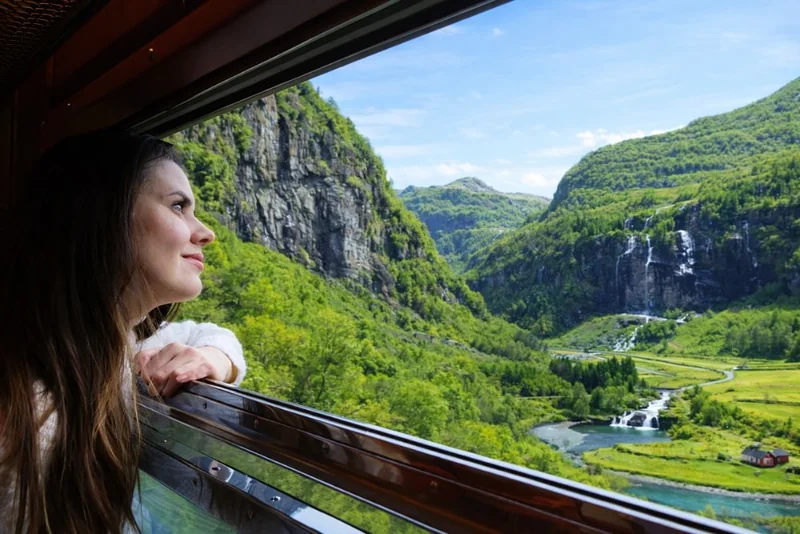
Want the cliffs from the postcards? They are a day's travel west. This private trip takes the Bergen Line and the Flåm Railway, sails about two hours between Flåm and Gudvangen on an arm of the Sognefjord and drives you back over the Hardangervidda plateau, with a driver-guide all the way.
Most visitors meet the Oslofjord as the blue bit behind the Opera House. It is worth a closer look, because what
you choose to sail on shapes the two hours more than the route does.
A fjord with a city at the end
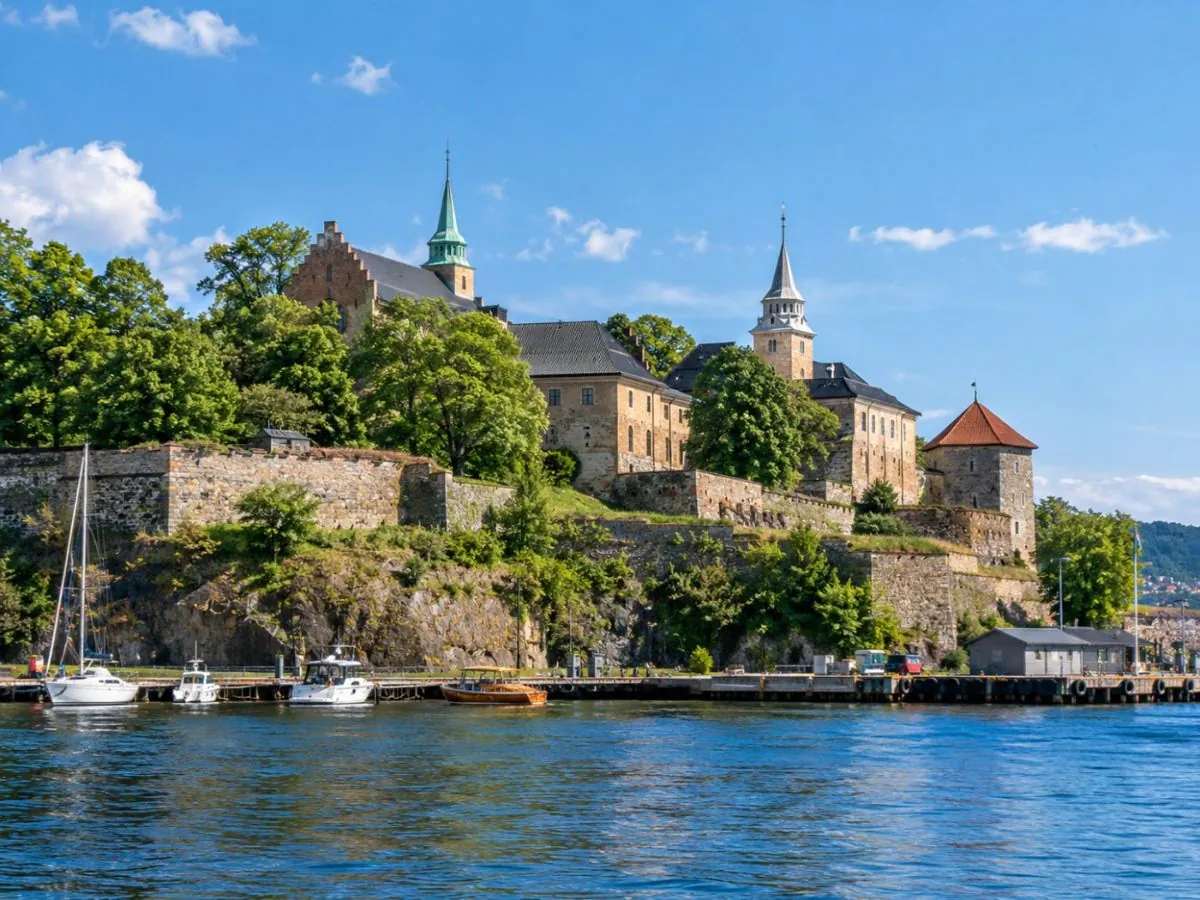
Oslo grew up where the fjord runs out of room. Akershus Fortress was begun in the late 1290s on the rock above the harbour,
and the fjord was the city's road to the world for most of the centuries since. The approach was defended for a reason. At
Drøbak, about 30 km south, the fjord squeezes to roughly a kilometre wide, and on 9 April 1940 the guns of Oscarsborg sank the
German heavy cruiser Blücher there. The delay gave the King and the government time to leave Oslo.
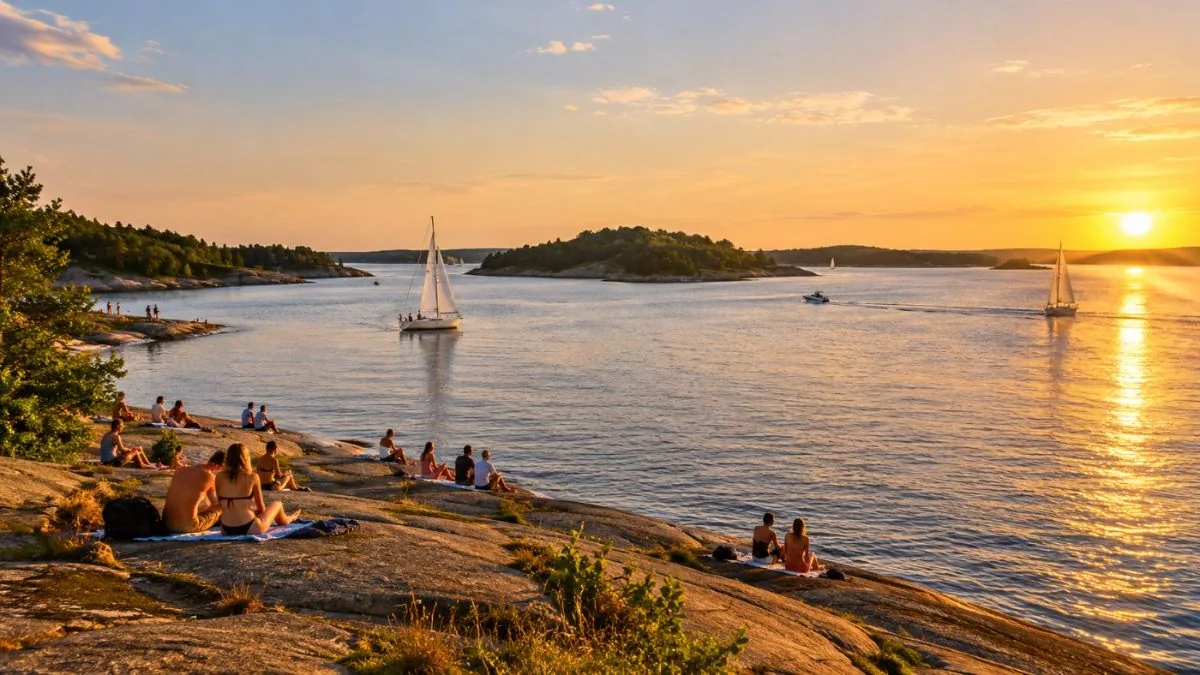
Today the inner fjord is the city's summer garden. Ruter's electric island boats have run out to Hovedøya and the cabin islands
since a concession of 1917, and on a warm Saturday the bathing rocks are full. The sightseeing boats sail through all of it.
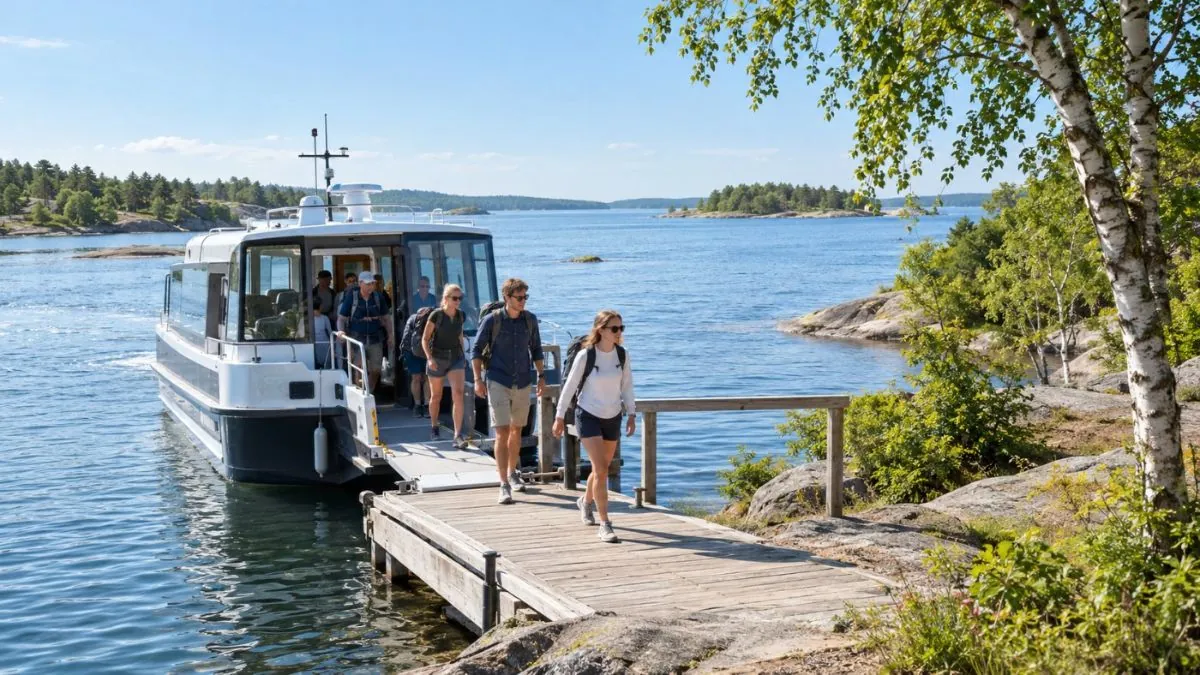
Lindøya has about 300 summer cabins, built from 1923 onwards. You see them up close from the boat.
What you actually see
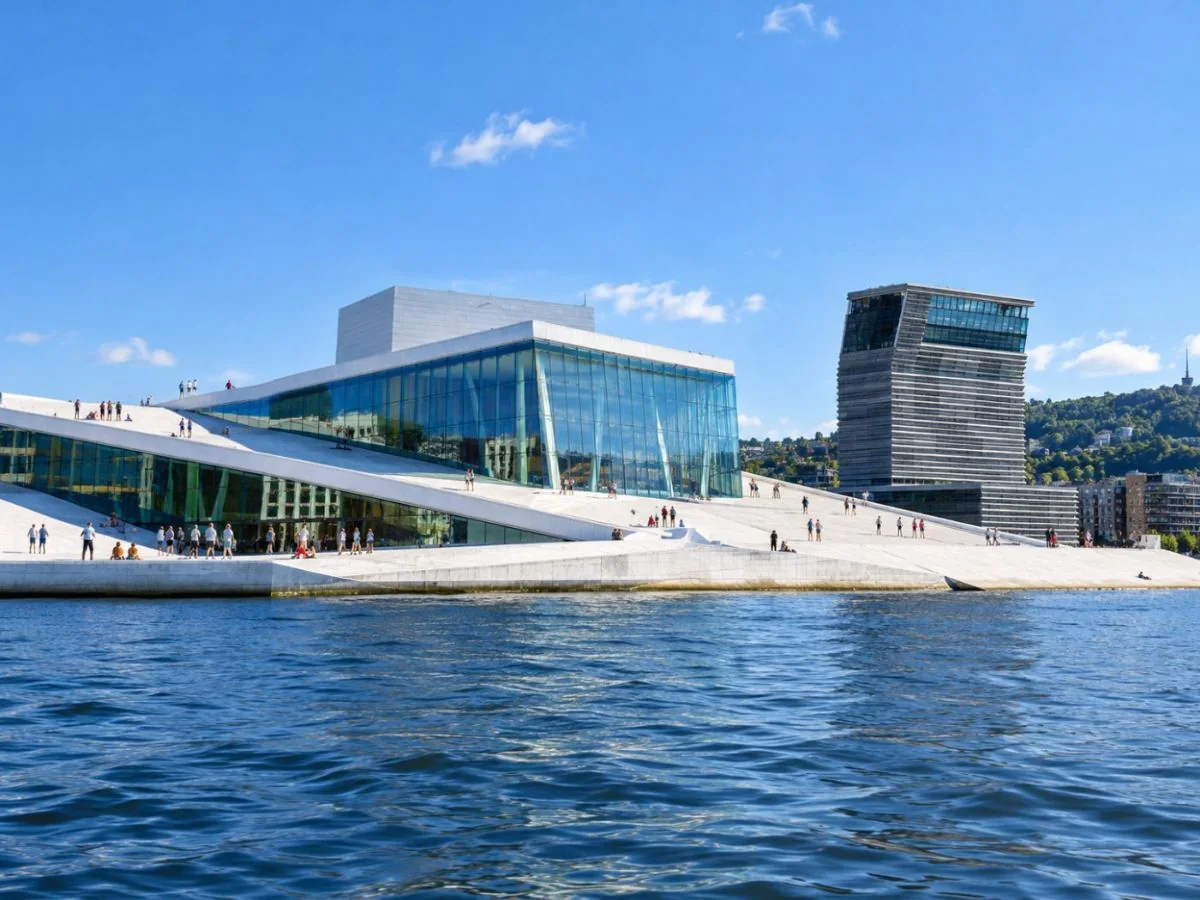
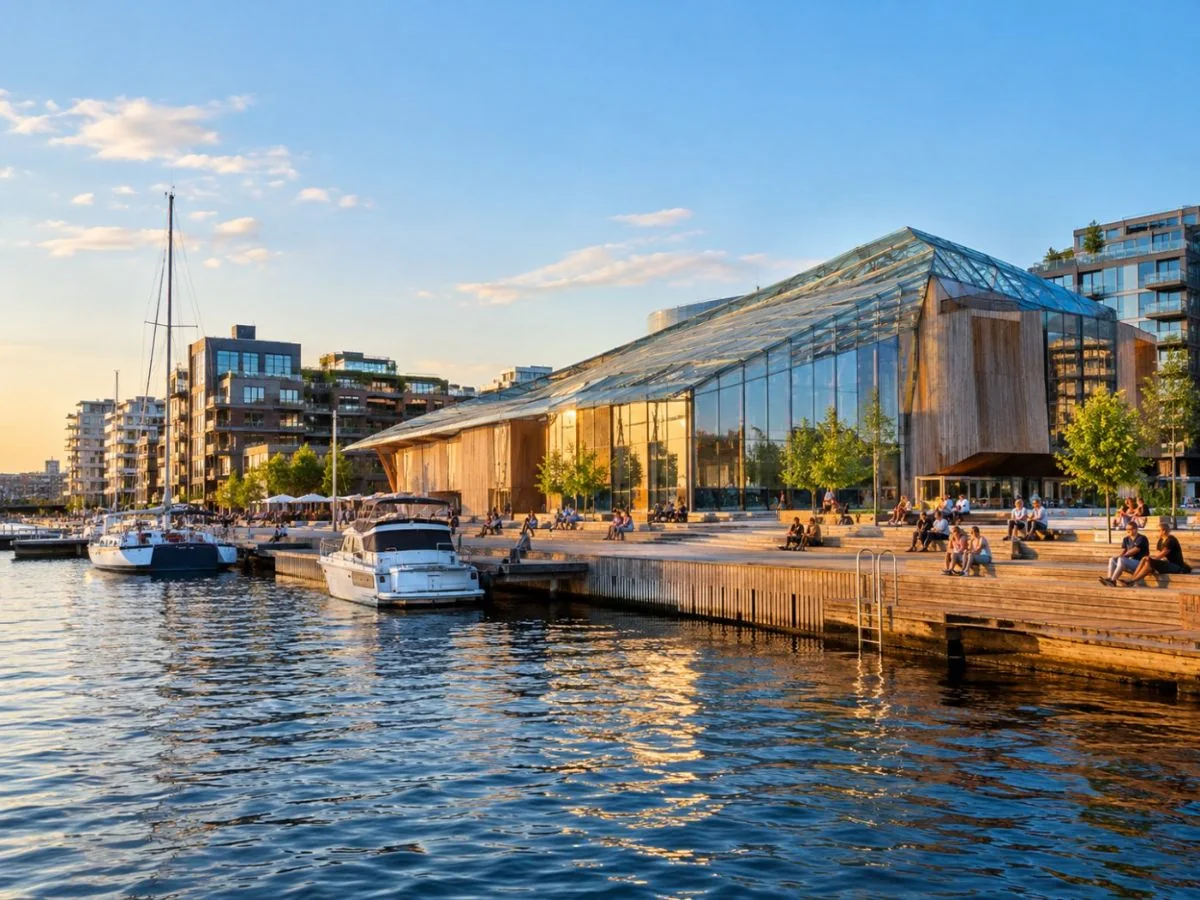
Leaving City Hall, the fortress walls slide past first, then the white marble of the Opera House (opened in 2008) and
the tall MUNCH museum beside it (2021). Out in the islands come Hovedøya, where Cistercian monks founded an abbey in
1147, the painted cabins of Lindøya, the nature reserve on Gressholmen, where Oslo's first airport was a seaplane
harbour, and the little Dyna lighthouse on its rock. The loop usually turns along Bygdøy, the museum peninsula, and
comes back past the Renzo Piano roofs of Tjuvholmen.
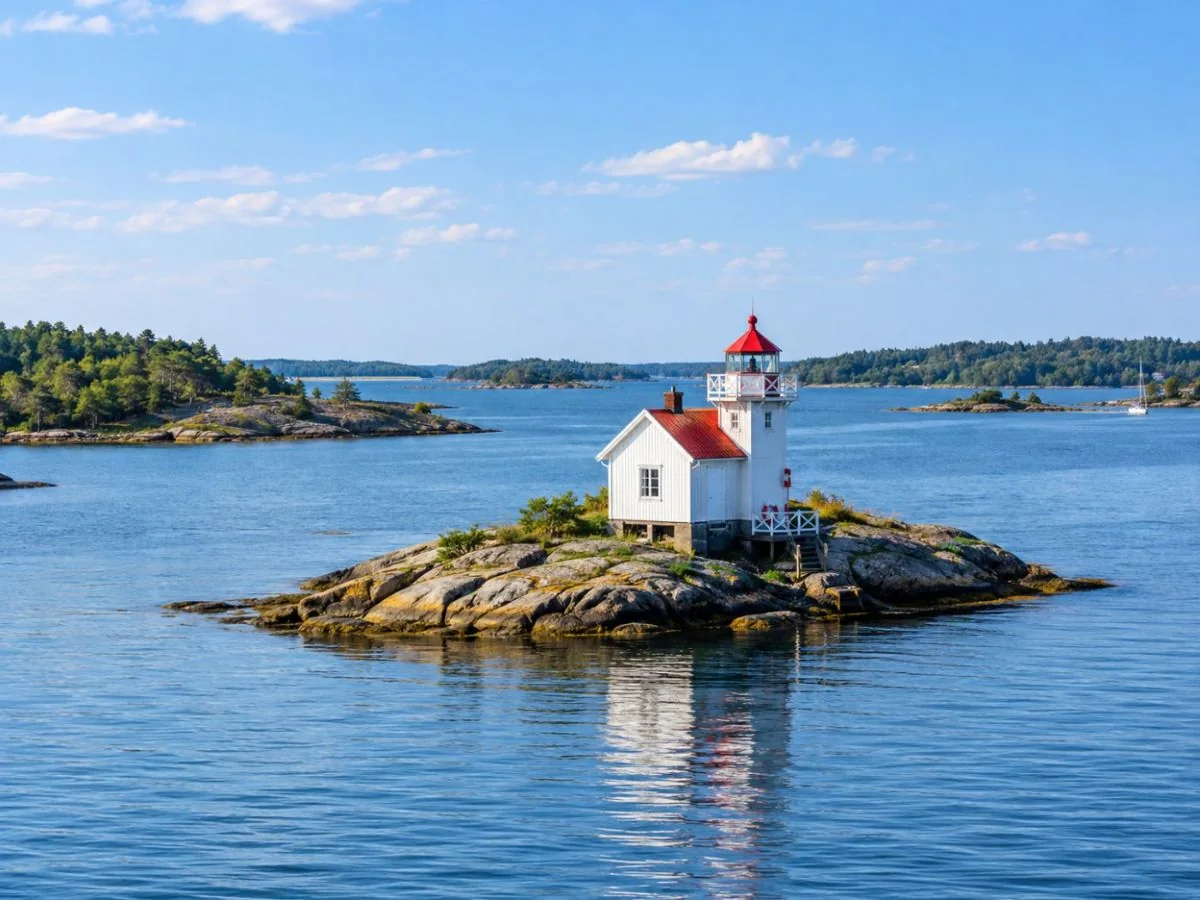
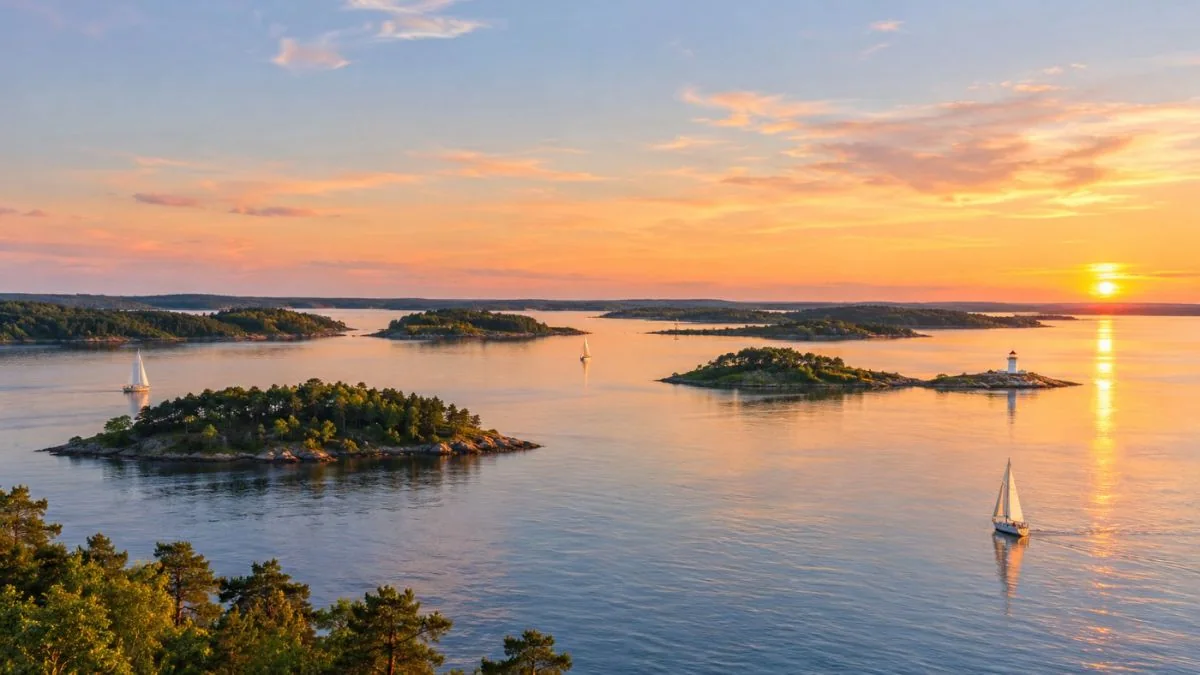
Dyna lighthouse sits on a rock in the middle of the inner fjord. Most loops pass it.
The honest small print: you do not need a cruise to get onto the water. Ruter's island boats leave
Rådhusbrygge 4 all year on an ordinary public transport ticket, and they stop at the islands the cruises only pass. What a
cruise adds is the commentary, the loop past the waterfront and a seat with a blanket. Our
ferry vs cruise guide sets them side by side.
Who talks, and how
This is the real difference between the boats. The silent boat from Pier 2 has a live guide in English, the only one
among the city cruises. The wooden sailing ship plays English commentary over the speaker and offers an app in 13
languages. The electric cruise from the Opera House runs its commentary through a free app, which means headphones and a
charged phone. None of them is wrong. If you want to ask questions, though, only one boat has someone to ask.
What it is not
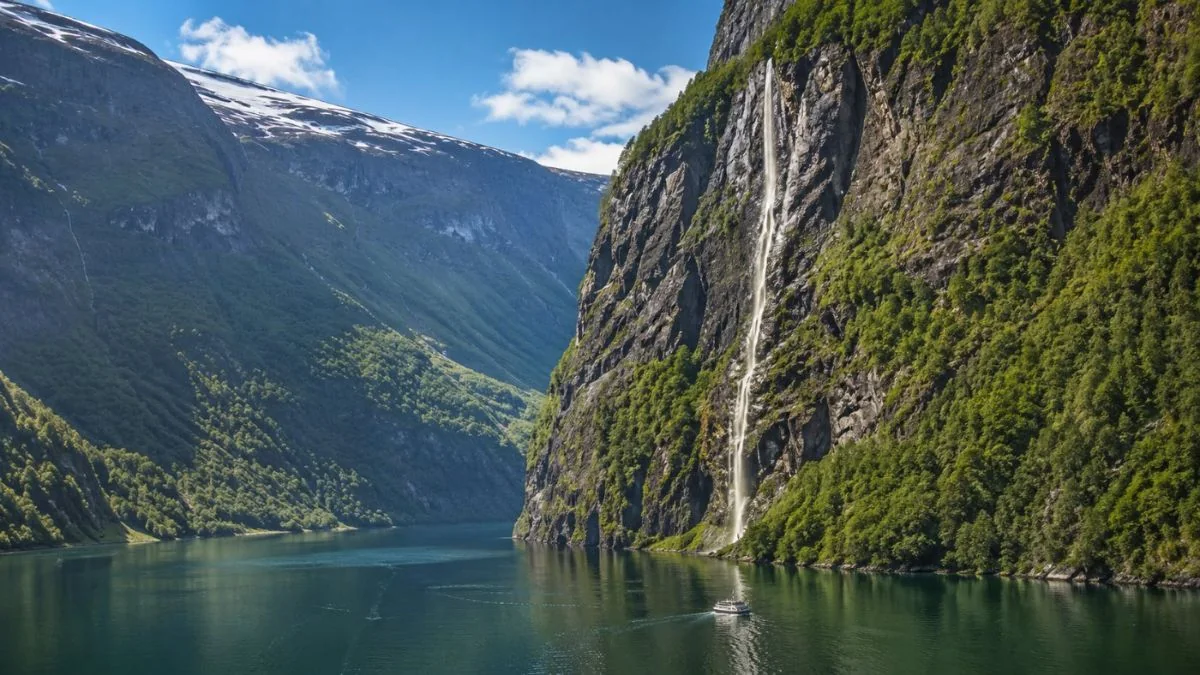
It is not Geiranger. The UNESCO-listed western fjords have rock walls up to 1,400 m high; the shores of the inner
Oslofjord are low, wooded and dotted with cabins. That is not a flaw, just a different trip. If the cliffs are why you came to
Norway, plan a day or two west. The fjords near Oslo guide explains what is realistic
from the capital.
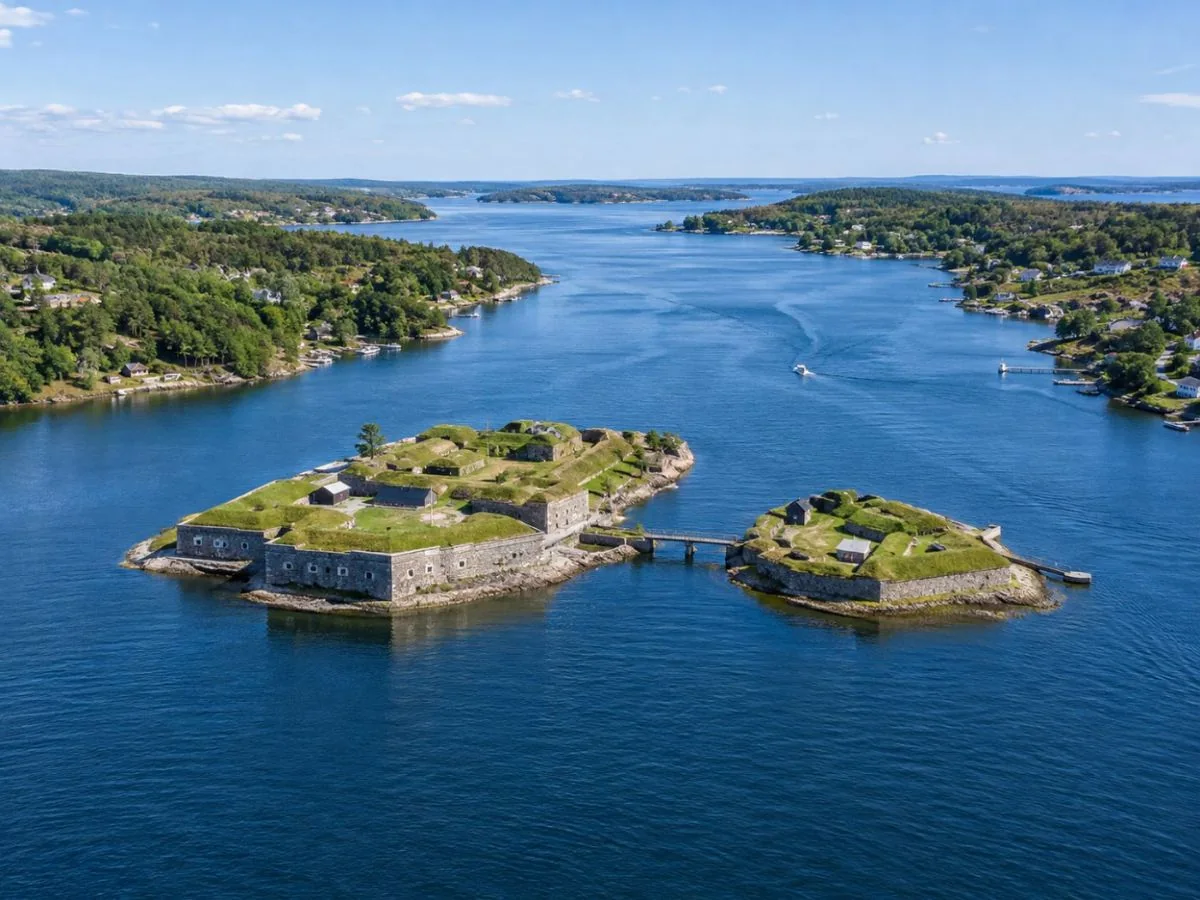
The Drøbak narrows, where the inner fjord begins. Oscarsborg sits on the islets in the middle.
When to go
May to early September has the long days, the summer-only boats and the islands at their liveliest. May is Oslo's sunniest
month on average, and around midsummer the light lasts until almost 23:00. Winter cruises still run, with heated saloons and the
skyline lit up by mid-afternoon. Whatever the month, bring one more layer than you think you need.
Straight answers to what people ask most about cruising the Oslofjord.
Can you do a fjord cruise from Oslo?
Yes. Oslo sits at the head of the Oslofjord, and sightseeing boats leave all year from the City Hall piers and from Langkaia by the Opera House. Most trips last 1.5 to 2.5 hours and loop through the inner islands. The steep, cliff-walled fjords from the postcards are in western Norway, a long day away: see fjords near Oslo.
Is the Oslofjord cruise worth it?
For a first day in Oslo, yes. Two hours on the water shows you the Opera House, Akershus Fortress and the cabin islands from the angle the city was built to be seen from. Skip it if you expect high mountains: the inner fjord is low, green and island-dotted. Our honest take is in is it worth it.
The Oslofjord itself: the city is built around its innermost end. The nearest of the famous western fjords is the Sognefjord system, reached from Oslo by the Bergen Line and the Flåm Railway. That trip runs to about 6 to 7 hours one way to Flåm by train.
Can I take a day trip from Oslo to the fjords?
Only as a very long day. A private tour from Oslo to Flåm and the Sognefjord takes about 15 hours, and the classic Norway in a Nutshell route is usually done one way to Bergen or over two days. Geiranger, about 420 km by road, is not a day trip. Details in fjords near Oslo.
Do I need to book an Oslo fjord cruise in advance?
In summer and on sunny weekends, it helps: the wooden sailing ship does not guarantee a seat, and the dinner cruise needs dietary requests 24 hours ahead. Every cruise on this site can be cancelled free up to 24 hours before, so booking early costs you nothing if the weather turns.
Can you take a public ferry on the Oslofjord instead?
Yes. Ruter's electric island boats leave Rådhusbrygge 4 all year, and a regular Ruter ticket is valid on them. You get the islands but no commentary and no loop past the Opera House. See island ferries vs cruises.
Do Oslo fjord cruises run in winter?
Yes. The wooden-ship sightseeing trip, the electric cruise from the Opera House, the silent guided boat and the dinner cruise all sail through the winter, with heated saloons or heat lamps. The wooden ship is cancelled if the fjord freezes. More in winter 2026-27.
What is the best month for an Oslofjord cruise?
May to early September. May is Oslo's sunniest month on average, July the warmest, and in late June daylight lasts about 19 hours. August is the wettest month in Oslo, so pack a layer. See the best time to go.
Where do Oslo fjord cruises leave from?
Most leave from the City Hall waterfront (Rådhusbrygge 2, 3 and 4) between City Hall and Aker Brygge. The electric cruise from the Opera House leaves from Langkaia, a few minutes' walk from Oslo Central Station. Check the pier on your ticket: they are different boats from different companies.
How long is a fjord cruise in Oslo?
From 1.5 hours (the electric cruise from the Opera House and the winter fish soup trip) to 2 hours (the sailing ship, the silent boat and the electric cruise from City Hall) and 2.5 hours for the dinner cruise. The island walk by public ferry takes about 3 hours 15 minutes.
Is Oslo or Bergen better for a fjord cruise?
Bergen is the gateway to the deep, steep western fjords; Oslo has a broad, island-filled fjord right in the city. If cliffs and waterfalls are the point, plan around Bergen or Flåm. If you are in Oslo for a few days, the Oslofjord is two easy hours. More in fjord cruises from Oslo.
Ready to book
Pick your boat, pick your time.
Sailings all year from the city centre, with free cancellation up to 24 hours before.

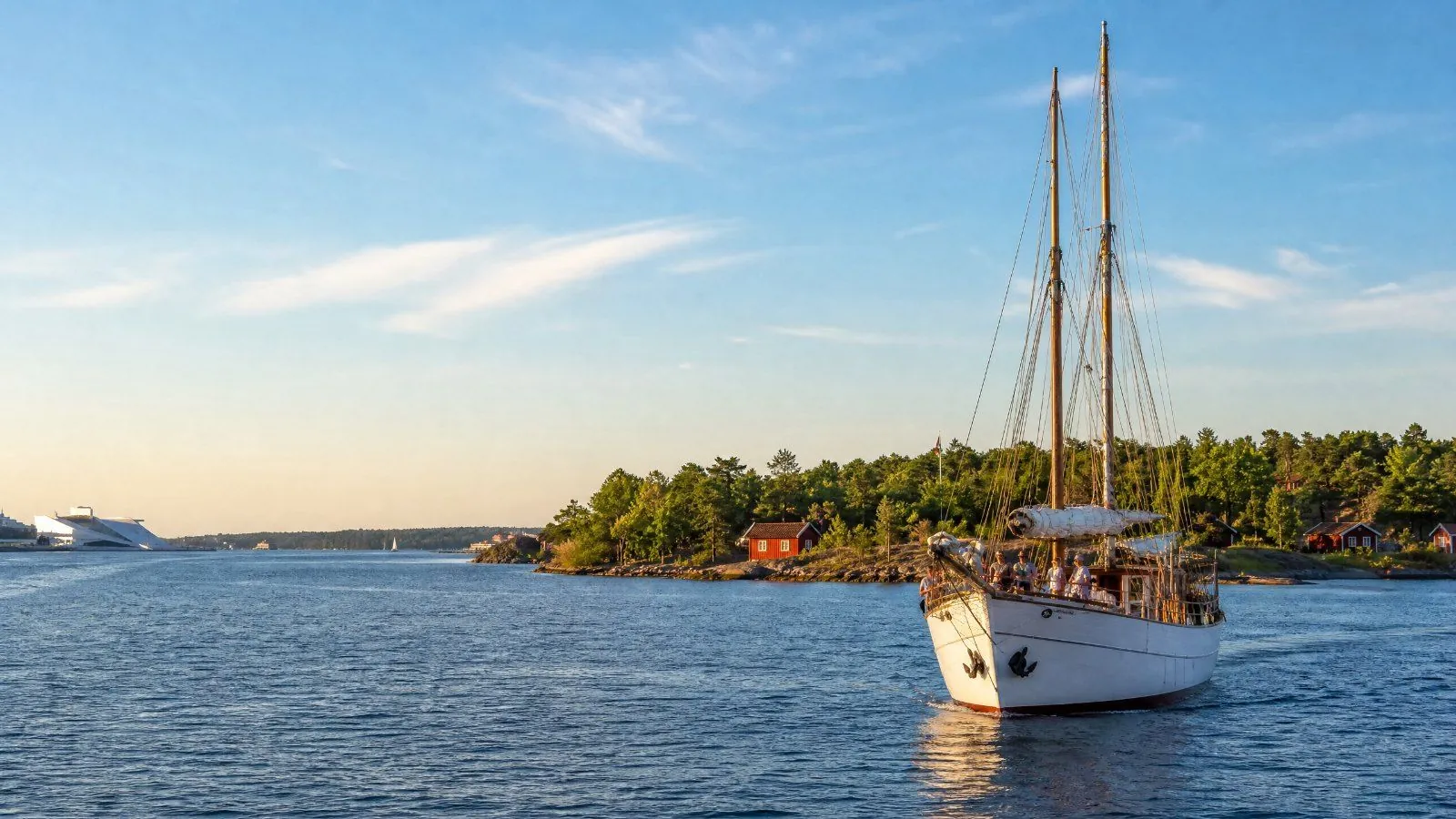
 Classic sailing ship
★ 4.52 hoursFree cancellation